

SpaceX has made history with Starship, but the test did not go fully to plan. The spacecraft returned from orbit and was caught by its launch tower. Its booster, however, was lost during the flight.
A first for SpaceX Starship
As reported by CNBC, the test took place on November 13 and 14 at SpaceX’s Starbase site in Texas. It was the 15th test flight of Starship. The company wanted to bring both parts of the rocket back to Earth and catch them with the arms of its launch tower. SpaceX planned to try something never done before: catch the Starship upper stage after it had travelled around Earth. The plan was part of its goal to make the rocket fully reusable.
The rocket lifted off on Friday. Its two stages split as planned. The upper part, known as Ship, continued towards orbit. The lower part, called Super Heavy, began its return to the launch site. But the booster did not make it back to the tower.
Booster aborts its return
The company had planned to catch Super Heavy with two mechanical arms, often called chopsticks. The booster faced a problem. It ended its boostback burn early after a low-fuel warning. Its guidance system found that it was not in the right position for a safe catch. The system called off the landing attempt. The booster changed course and headed for a splashdown in the Gulf of Mexico. It was lost on the descent.
The booster was redirected to the Gulf, while the spacecraft continued its journey. The loss meant SpaceX could not complete the planned double catch. The company said it was still looking into the cause of the issue. The upper stage had a different result. It reached orbit and released 26 Starlink V3 satellites. It then spent 22 hours travelling around Earth, making 14 laps before it began its return.
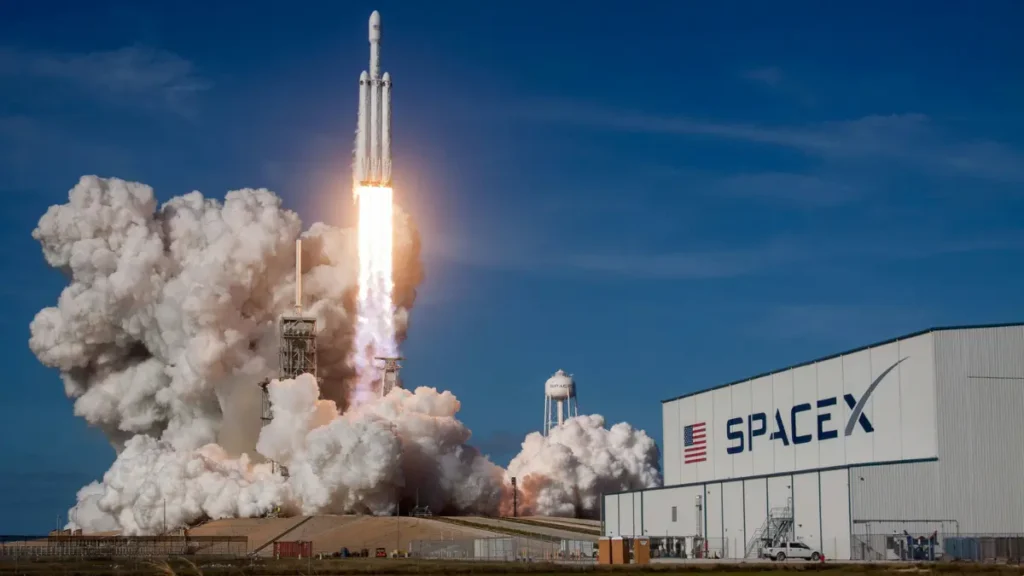
SpaceX Starship makes a historic catch
On November 14, Ship came back through Earth’s atmosphere and headed towards Starbase. It slowed down, turned upright and lined up with the launch tower. The tower’s mechanical arms caught it in mid-air. This was the first time SpaceX’s Starship spacecraft had been caught by the launch tower. SpaceX had already caught Super Heavy boosters. Catching the upper stage was a new and harder task.
The catch marked a major step for the company’s plan to reuse the full rocket. Bringing the spacecraft back in one piece gives engineers a chance to inspect its heat shield, engines and other parts. SpaceX wants Starship to carry people and cargo to the Moon and Mars. Reusing both stages could lower the cost of launches. But the rocket must prove it can land safely and fly again many times.
SpaceX wants Starship to carry people and cargo as a business venture to the Moon and Mars. Reusing both stages could lower the cost of launches. But the rocket must prove it can land safely and fly again many times.
Author’s Opinion
The test shows both the promise and the risks of space travel. Catching Starship is a major step, but losing the booster is a reminder that full rocket reuse is still a work in progress. SpaceX will need more successful tests.
READ MORE: Microsoft restores Outlook and Teams after global outage.
ALSO READ: Tesla Cybercab: Musk reveals $29,990 price and $299 fee.
READ NEXT: Google smart glasses face privacy backlash ahead of December launch.






Comments
0Be the first to join the discussion.